
How AI Can Improve Clothing Size and Fit Recommendations
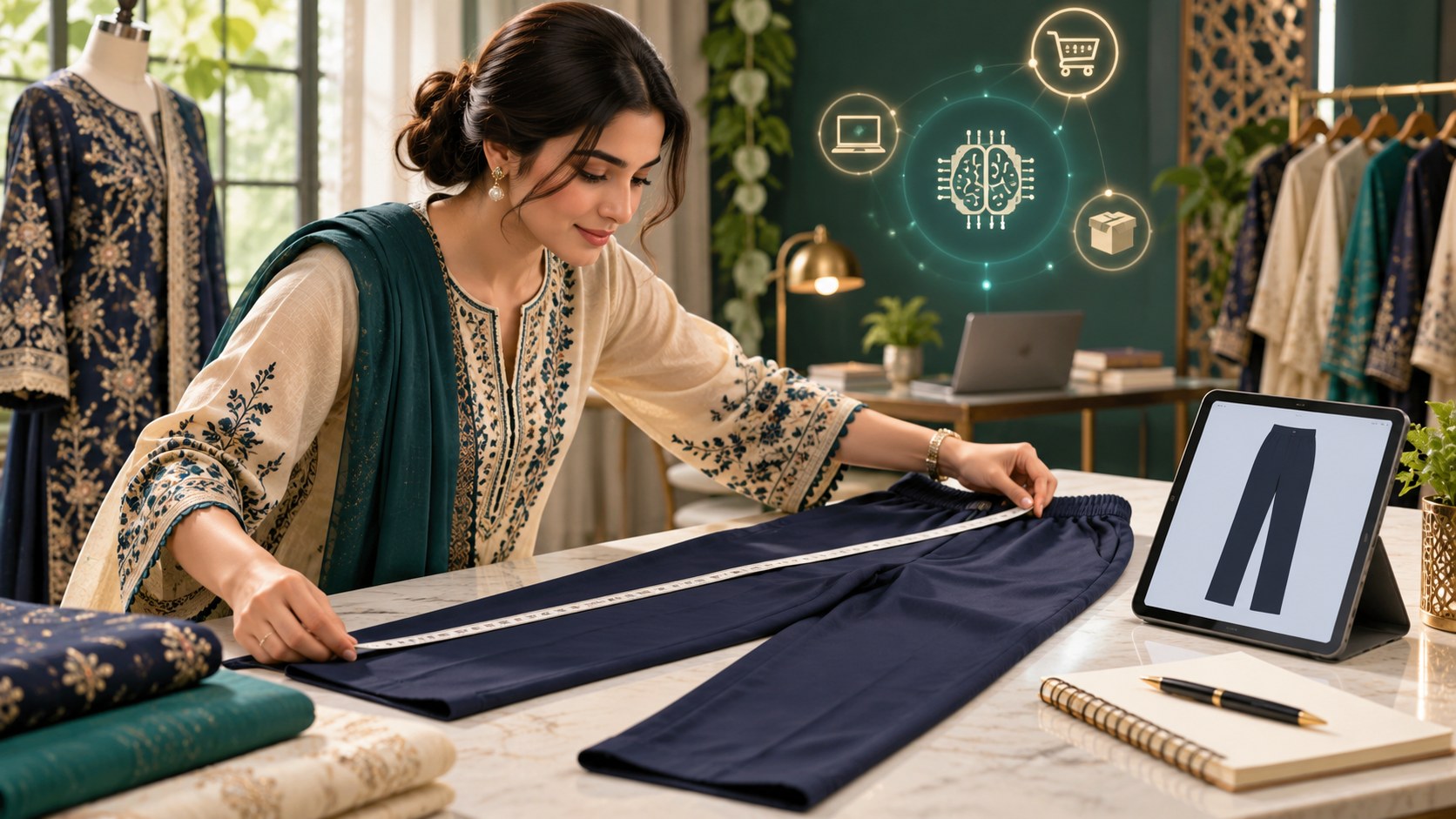
A guide from QC – Qurat Clothing (SMC-Private) Limited
Choosing a clothing size online involves more than converting one label into another. Two garments marked with the same size can have different measurements and intended fits. AI can help organise the available information, but a useful recommendation should explain its basis and preserve uncertainty when the evidence is incomplete.
Qurat Clothing shares this guide to support informed apparel comparisons. It does not claim that the company provides a particular personalised sizing model or guarantees fit through AI. Customers should check the selected item’s actual measurements, available sizes and relevant details before ordering.
Distinguish three kinds of size information
A size label is the manufacturer’s designation, such as an age range or letter size. Body measurements describe the person. Garment measurements describe the item itself. These are related but should not be treated as interchangeable values.
For example, a flat chest measurement across a garment is not automatically a body circumference. The measurement method and units need to be clear. An assistant should ask for clarification rather than silently convert an ambiguous value.
Start with the exact product
Keep the product code and selected variant attached to the enquiry. Similar-looking garments can differ in length, width and stretch. A generic size chart should not overwrite item-specific measurements.
For export-surplus and stock-lot clothing, the available assortment may be uneven. The recommendation should consider the sizes actually offered for that item. It should not invent an intermediate size or assume a sold-out variant will return.
Collect the garment evidence
Useful details may include length, chest width, sleeve length, waist and trouser length, depending on the garment. Record how each value was measured and whether it is supplied or verified. Preserve the units consistently.
Our garment measurement photo checklist explains how clear photographs can make these values easier to inspect. If an important dimension is missing, request it rather than estimating from the model’s appearance.
Understand the shopper’s comparison
A practical approach is to compare the listed garment with a similar item that already fits comfortably. The shopper should use the same measurement method. This can be more informative than relying on a label alone.
Ask about the desired fit in ordinary language: closer, regular or looser. Preferences matter, but they do not supply missing garment dimensions. Keep the person’s stated preference separate from a verified measurement.
Where AI can assist
An assistant can arrange the measurements into a comparison table, explain the difference between two available sizes and identify missing information. It can help make the reasoning understandable rather than returning a bare size label.
For a bounded task, instruct the tool to use only the supplied product and comparison measurements, preserve units and state uncertainty. Do not allow it to invent a stretch allowance or fitting rule without appropriate product evidence.
How learned size models differ
Some systems learn from historical purchases and fit feedback. Their usefulness depends on the quality and relevance of those records. A returned item may have been returned for a reason unrelated to fit, so the event needs an accurate label.
The research paper Recommending product sizes to customers presents a model for size-fit outcomes in its stated setting. It illustrates a research approach, not a guarantee that the same method will work for a small retailer or a one-time stock lot.
Handle sparse and new products
A newly received item may have no fit history. A model trained on other products can face uncertainty if construction or measurements differ. In that situation, item-specific evidence and a transparent comparison may be more appropriate than a confident personalised prediction.
Do not transfer a previous item’s fit claim merely because the colour or style is similar. Our stock-lot inventory guide explains why product identity and variant records need to remain distinct.
Be careful with fabric behaviour
Stretch, thickness and construction can affect fit, but they need reliable evidence. A photograph cannot establish composition or stretch recovery. Avoid using an AI-generated model image to infer how the garment will behave on a person.
If the available details do not support a material assumption, say so. A useful answer can identify what must be checked before making a recommendation rather than pretending every fit question has a precise solution.
Use children’s age labels thoughtfully
An age label is a reference, not a complete description of a child’s proportions or preferred fit. Compare the actual garment dimensions and the available size details. Avoid inferring a size from a photograph of a child.
Where a parent is comparing a currently worn garment, keep the measurement method consistent. Ask only for information needed to answer the question and do not collect unnecessary personal details.
Explain the recommendation
A helpful answer states the product, the sizes compared, the measurements used and the relevant uncertainty. For example, it may explain that one available option is longer than the comparison garment while another is closer in width.
Do not present “best fit” as certainty when key measurements are missing. Make clear that a suggestion is based on supplied information and that the shopper should review the actual item details.
Evaluate the complete experience
Measure whether shoppers understand the advice and can find the relevant measurements. Review fit-related feedback separately from returns caused by colour, condition or delivery issues. Do not claim a reduction in returns without a suitable comparison.
Amazon’s account of its sizing tools describes the use of multiple information sources in its own service. Its scale and data should not be assumed to apply to another store.
A hypothetical comparison
A shopper asks about two available sweatshirt sizes. The assistant arranges the listed length, chest width and sleeve values next to measurements supplied from a comfortable existing sweatshirt. One product dimension is unclear, so it requests verification.
The final answer explains the observed differences and the shopper’s stated preference. It does not infer body size, invent a missing value or guarantee the outcome. This keeps the guidance useful and inspectable.
Practical review checklist
- Confirm the exact product and available variants.
- Separate labels, body values and garment values.
- Use consistent methods and units.
- Preserve unknown dimensions.
- Explain the comparison and its limits.
- Keep personal information limited to the task.
For related discovery guidance, read how clothing recommendation systems work. A relevant product suggestion and a physical fit recommendation are different tasks and need different evidence.
Frequently asked questions
Can AI guarantee the correct size?
No. It can assist with a comparison, but fit depends on the garment, measurements, preferences and information quality.
Is the same label consistent across every garment?
Do not assume so. Check the exact product’s measurements and stated details.
Can a model photograph replace a size chart?
No. A photograph provides visual context but does not establish the measurements needed for a reliable comparison.
Key takeaway
AI-assisted size guidance is most useful when it makes the evidence clearer. For Qurat Clothing shoppers, the exact garment’s measurements and available sizes should remain central, with recommendations explained as informed comparisons rather than fit guarantees.
Explore Qurat Clothing
Visit Qurat Clothing to browse current apparel. Compare the selected item’s photographs, measurements, condition notes and available sizes before ordering.
Comments
Be the first to comment.