
Why a Button-Front Shirt Gaps and What to Compare Before Reordering
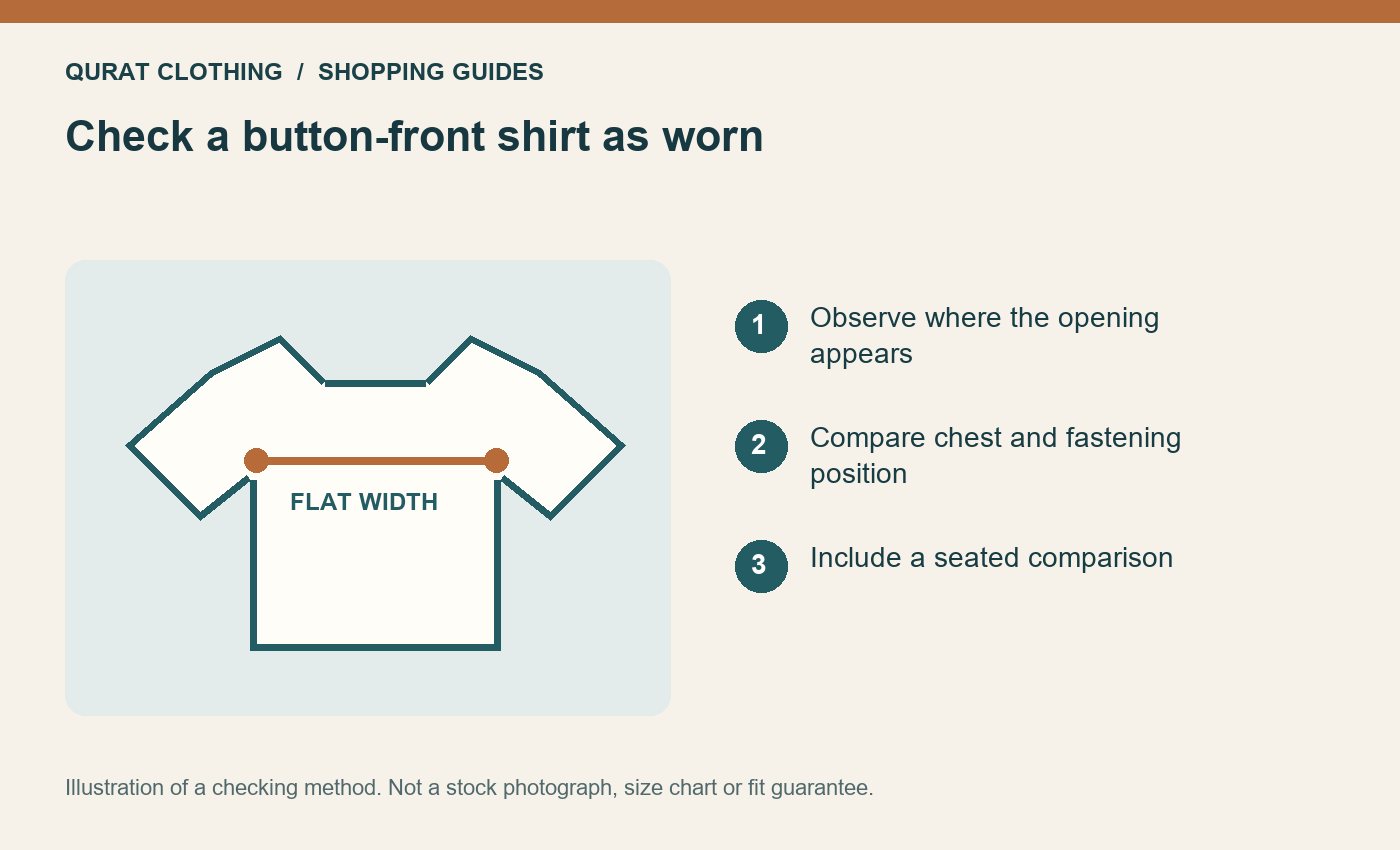
If a button-front shirt gaps between fastenings, record where and when the opening appears, then compare the complete fit with a comfortable reference shirt. Chest width, fastening placement, fabric and the way the shirt is worn can all be relevant. A photograph alone cannot establish one universal cause.
Do not assume that ordering the next label size will change only the area of concern. It may also change the collar, shoulders, sleeves and overall length.
Observe the shirt in the intended outfit
Check whether the opening appears while standing, sitting, reaching or wearing an underlayer. Note whether the shirt is tucked in and whether pulling at the hem changes how it sits. Make the comparison using the ordinary outfit rather than an arrangement created only for a photograph.
If the garment is newly delivered and the fastening or construction appears different from the listing, photograph the concern before altering it. Use the current exchange and return terms and an item-specific support enquiry.
Compare separate fit details
| Check | What to record |
|---|---|
| Chest | Relaxed flat width at the same points as the seller. |
| Fastening | The location of the opening relative to the buttons. |
| Shoulder and sleeve | Whether seam position and movement differ from the reference. |
| Length and styling | Tucked or untucked use and any underlayer. |
| When it occurs | The position or movement associated with the observation. |
A useful reference comparison
Choose a shirt that fastens and feels comfortable for the same intended use. Measure it relaxed, using matching points. Keep its construction in mind: a stretch shirt and a non-stretch shirt do not necessarily behave the same because one flat chest reading matches.
Our flat-width guide explains why garment width should not be confused with body circumference. For neck fit, compare the collar separately rather than expecting a chest number to answer that question.
Example: the shirt looks fine while standing
Suppose an opening appears only when seated at a table. Record that observation and compare the reference shirt in the same position. Ask for missing item measurements or fastening photographs before selecting another shirt. A standing product photograph cannot settle the seated comparison.
If the issue is concentrated at a particular closure or damaged part, ask the seller to review that detail. If you are considering a modification, ask a suitable tailoring professional about the actual garment instead of adding extra fastenings based on a general article.
Prepare a clear reordering enquiry
Send the QC code, selected size, reference dimensions and a concise description of where the opening occurs. Ask which available item's measurements and construction can be confirmed. Keep any substitute code distinct from the original item.
- Have the chest measurements used matching points?
- Has the intended seated or moving use been considered?
- Are shoulder, sleeve, collar and length still suitable?
- Are composition and fastening details available?
- Does the proposed item satisfy the whole requirement?
Explore current button-front shirt choices and the general fit guide. Reordering is most useful when the new selection addresses the observed fit needs rather than simply replacing one uncertain label with another.
Comments
Be the first to comment.