
Dye Transfer or Fabric Colour Loss? Compare the Evidence
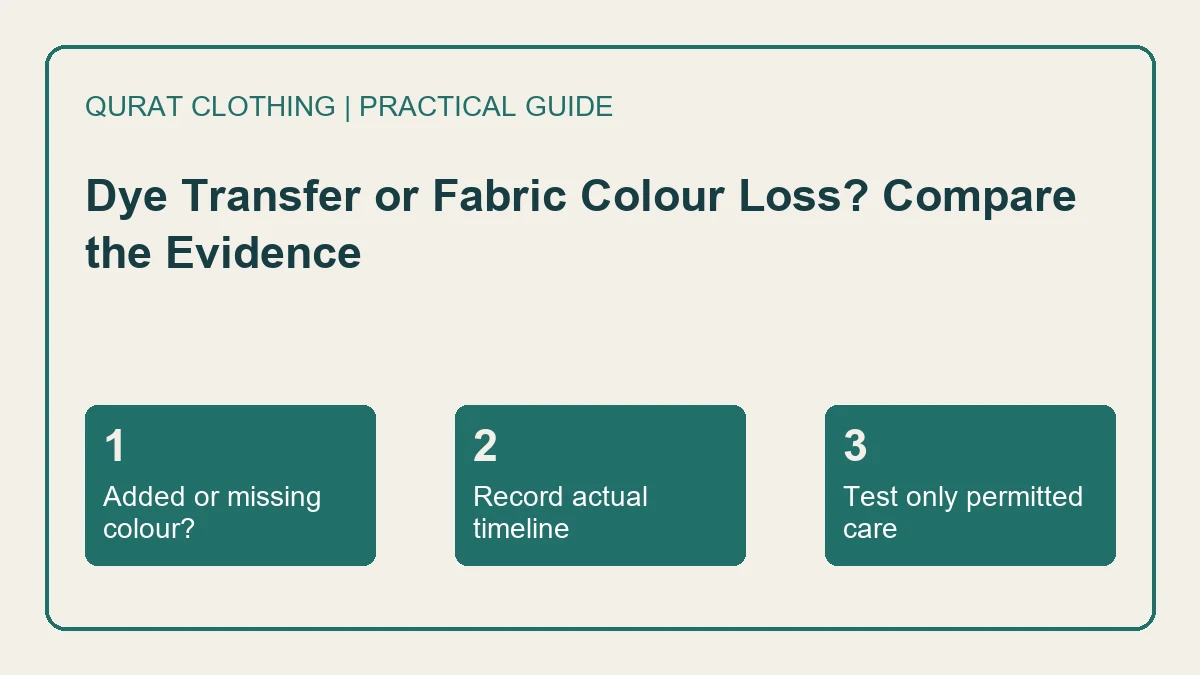
A coloured mark on clothing can be material transferred onto the surface, while a pale patch can involve colour removed from the original fabric. The next step depends on which observation fits the evidence. A photograph alone may not establish the cause, so avoid treating every mark as dye transfer.
Describe the direction of the change
Look at the garment in consistent light. Is a new colour present on a lighter section, or does an area look lighter than its surroundings? Is the mark near another coloured garment, a bag strap or a contact point? Record the position and any known event without using it as automatic proof.
Compare with an earlier photograph if available. A new purchase may also have a deliberate washed effect or colour variation shown in the listing. Screen appearance and lighting can create uncertainty; check the actual item and description together.
Gather the care history
Note whether the mark was present on delivery, appeared during wear or was noticed after washing. Keep the care label and the actual wash record. Record other items in the load if relevant, but do not accuse a particular piece without evidence.
A darker item in the same wash makes transfer a possibility, not a demonstrated cause. Similarly, a pale patch does not prove bleach was used. Product contact, wear and intentional finishing are among the observations a professional may need to consider.
Do not treat added colour and missing colour as the same problem
A compatible stain treatment may sometimes address material deposited on fabric. It cannot be assumed to replace colour that has been lost. Aggressive scrubbing or a strong treatment can create a second change and make the first issue harder to assess.
Follow the garment label and any treatment product's restrictions. Test a permitted product as directed in an inconspicuous area. Do not mix treatments or use a solvent in a washing machine. Whirlpool's stain-removal guidance supports checking compatibility and testing before use; it does not diagnose your particular mark.
Preserve evidence for a recent purchase
If a concerning mark was present on arrival, photograph the item before cleaning and contact Qurat Clothing with the product code and location of the issue. The delivery inspection guide explains how to keep a clear record.
Read the return policy for eligibility and exclusions. Avoid altering or bleaching the garment before the retailer can assess it. A change noticed after washing should be described with its actual timeline rather than presented as a documented arrival fault.
Plan the next care decision
For an item already in use, a textile cleaner can assess what treatment is suitable and whether colour loss appears permanent. Explain any products already applied. Do not promise that colour-run remover, vinegar or another household remedy will restore every fabric.
For future laundry, follow labels, separate items as appropriate to their instructions and avoid relying on a colour-catching product as permission to ignore them. When shopping current men's, women's, boys' and girls' clothing, check colour and care details together. A colour name or dark shade alone does not establish a tested colourfastness result.
A coloured deposit and a pale patch need different records
A light garment has a new coloured area after washing, while another section looks paler than before. The wearer needs to distinguish an added-looking deposit from an apparent loss of the original shade.
| Record | What to compare or ask |
|---|---|
| Before image | Look for a comparable earlier view. |
| Affected surface | Record colour, position and texture without destructive testing. |
| Laundry context | Keep the load and any treatment history. |
What this example helps you decide
The observation should guide the question, not an assumed cause. A product intended for one type of mark may not be suitable for another, and restoration cannot be promised from a photograph.
For an item enquiry, include the QC code, selected size and the specific detail you need clarified. Keep an observation separate from an assumption, and retain any relevant photographs with your order record.
Comments
Be the first to comment.