
How to Keep a Family Clothing Measurement Record
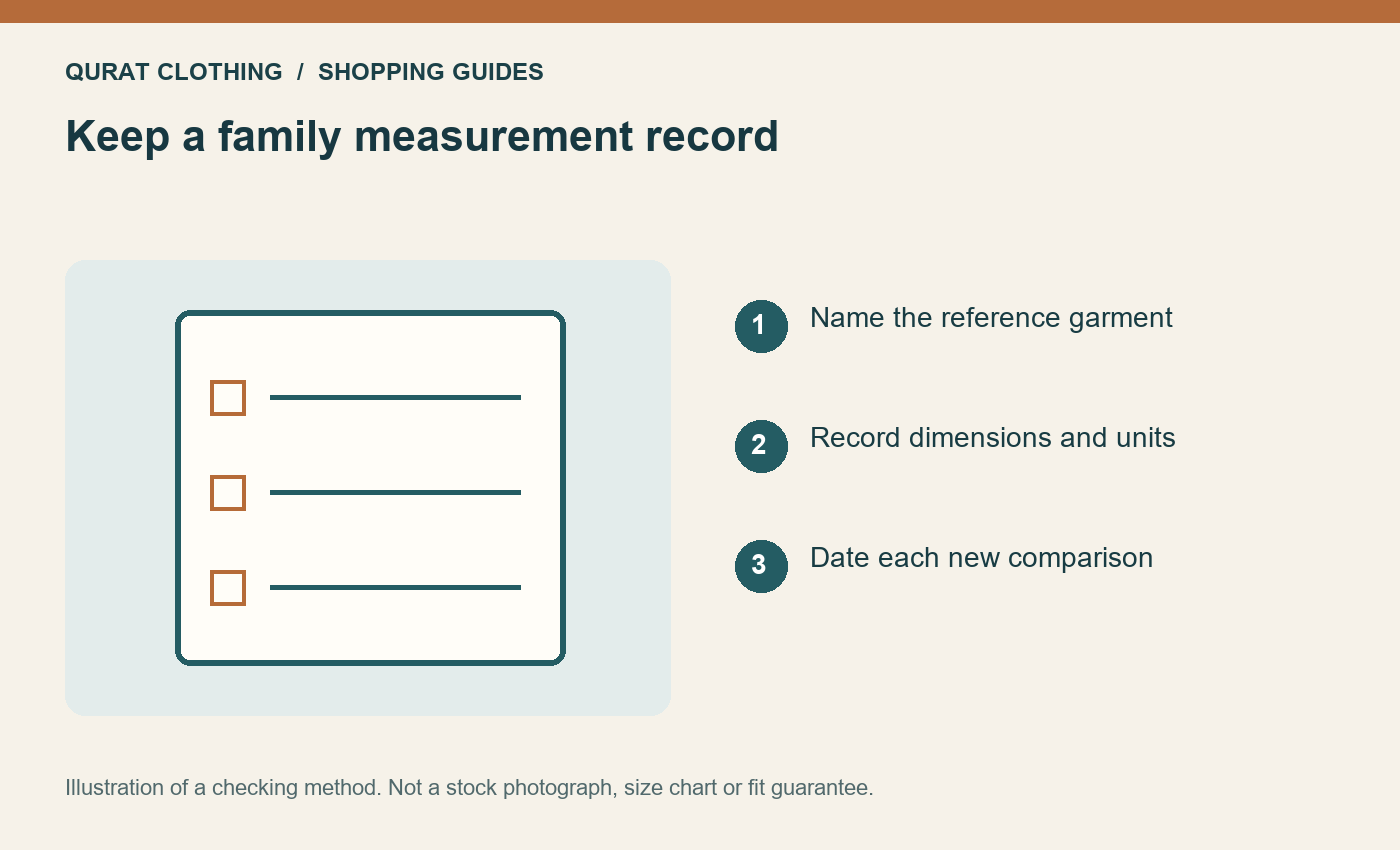
Keep a family clothing record by naming the reference garment, recording its actual dimensions and units, and dating the comparison. Use a separate record for each wearer and garment type. A saved age or label size alone is too limited to describe every future purchase.
The most useful record is one you can repeat. It should tell another person which garment was measured, where the tape was placed and whether the garment was relaxed, fastened or arranged another agreed way.
Start with garments that work now
Choose comfortable reference pieces for the situations you are shopping for. A top used over another layer may be a different reference from a shirt worn on its own. Keep trousers, tops and garments with unusual sleeve construction in separate entries instead of mixing their dimensions into one “family size.”
For children, review the reference when their current clothes no longer serve their needs. For adults, review it when fit preferences, garment use or the reference item changes. This guide does not prescribe a universal growth interval or assume that everyone needs the same ease.
A reusable record template
| Field | Your entry |
|---|---|
| Wearer / reference name | A name or private household identifier. |
| Garment and usual use | For example, a comfortable sweatshirt worn over a T-shirt. |
| Date and condition | When measured, with the garment's actual condition. |
| Units and method | Inches or centimetres; relaxed flat garment measurements. |
| Top measurements | Relevant chest width, sleeve path and length. |
| Trouser measurements | Relevant waist, rise, inseam/outseam and leg openings. |
| Photo reference | The images showing tape placement. |
| Purchase comparison | The proposed QC code, size and unresolved questions. |
Keep measurement types separate
A flat garment width is different from a body circumference. A sleeve measured from a shoulder seam is different from one measured from the neckline. Label each field clearly and use the same method when comparing a listing.
Use the size and fitting guide for the general approach and the children's garment measurement guide when organising kidswear. A record can include a label as identification, but it should not convert that label into a guaranteed fit standard.
Example: two children with different reference tops
Suppose two children both have clothing labelled for a similar age. Record each child's comfortable top separately, including its chest and sleeve measurements. When shortlisting an item, compare it with the intended child's record rather than assigning every garment with that age label to either child.
Keep a note of who the purchase is intended for. If the selected size changes while ordering, update the shortlist entry rather than relying on memory. This is particularly useful in a mixed-size family order.
Use the record before checkout
- Choose the current reference for the intended use.
- Compare the listing's matching dimensions and units.
- Ask for missing measurements with the QC product code.
- Check selected-size availability.
- Keep the final selection with the dated record.
Browse current girls' clothing, boys' clothing or the relevant adult category. Measurements help organise a decision; they do not reserve a product or replace the current purchase and exchange conditions.
Comments
Be the first to comment.