Hook-and-Loop Clothing Fasteners: Lint, Grip and Laundry Care
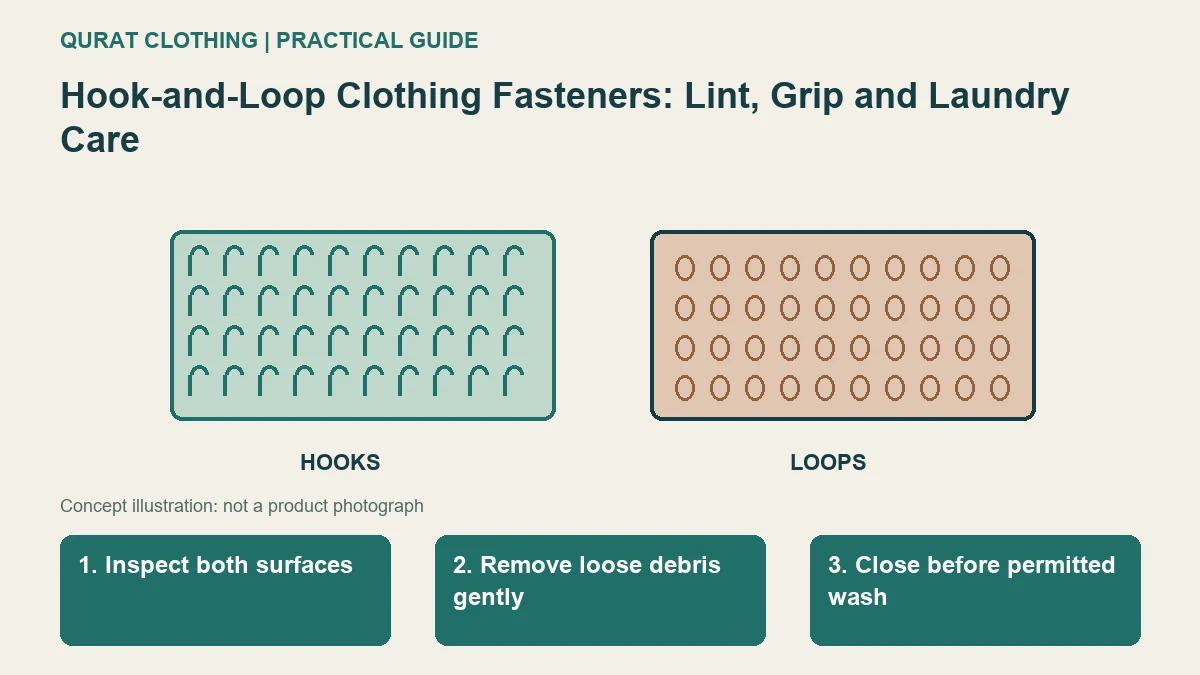
If a hook-and-loop clothing closure grips less well, first inspect both mating surfaces and their attachment to the garment. Trapped lint, a loose sewn edge and worn components are different observations. Cleaning may remove debris, but it cannot be promised to restore every damaged fastener.
Identify the fastener before choosing a treatment
Hook-and-loop is the generic closure type: one surface catches the other when pressed together. VELCRO is a brand name, so do not assume every similar closure comes from that manufacturer. Check any product-specific instructions available for the garment.
This guide covers ordinary clothing closures. Do not use it to assess whether a protective, medical or load-bearing product remains suitable for its purpose. Such an item needs its own manufacturer's process and requirements.
Inspect the closure and the fabric around it
Lay the garment relaxed in good light and open the closure gently. Look for loose lint or hair on the hooked surface, changes to the softer mating surface and any edge lifting away from the garment. Check the surrounding fabric without pulling it apart.
A clean-looking strip that has detached at its seam needs a different assessment from an intact strip holding visible lint. Do not keep pulling a loose edge to test the remaining stitches. Take an overall photograph and a close view if you need help describing the condition.
For a recent purchase, contact Qurat Clothing about an unexpected issue before treatment or alteration. The delivery inspection guide explains what evidence to keep, while the return policy sets eligibility and exclusions.
Remove loose debris without cutting the structure
For its own products, VELCRO's care guidance describes clearing debris from hook surfaces and keeping the hooks covered. Apply the actual garment and fastener instructions before choosing a cleaning method; that brand's advice is not proof of who made your closure.
Start with loose material that can be lifted gently. If the manufacturer's instructions permit a brush, use it carefully on the relevant surface and avoid dragging it over the surrounding cloth. Keep a fine or loosely constructed garment supported. Stop if fibres from the closure or garment begin to pull out.
Do not cut away the soft loops because they look fuzzy: they are part of the mating system. Avoid sharp improvised scraping tools, heat or adhesive as a way to make an uncertain closure grip again. Our snag guide explains the broader problem with pulling or cutting a connected yarn.
Close compatible fasteners before laundering
Read the garment's full care label first. A fastener that tolerates water does not make the complete item machine washable. Fabric, decoration and attachments may impose other requirements.
YKK's hook-and-loop FAQ advises engaging the two surfaces before washing or using a laundry net. The practical purpose is to keep exposed hooks from catching other material. Follow the actual garment and appliance instructions rather than assuming a bag permits an otherwise unsuitable cycle.
If the closure cannot remain engaged, or the attachment is damaged, seek advice before including it with vulnerable clothes. Our care-label guide helps organise the complete washing decision. Do not prescribe one universal temperature, dryer setting or ironing method for every closure material.
Decide whether cleaning or repair is the real question
After appropriate permitted care and complete drying, inspect whether debris was removed and whether the attachment remains intact. Reduced grip after cleaning may still need professional assessment. Repeated aggressive brushing is not a substitute for replacing a genuinely worn component appropriately.
If repair is worthwhile, ask a tailor about the original attachment method, surrounding fabric and likely result. Adhesive-backed and sewn components should not automatically receive the same repair. The repair assessment guide helps keep feasibility, cost and usefulness separate.
For future purchases, ask how an unclear closure operates before ordering from current boys', girls', men's or women's clothing. This is general care guidance and does not confirm that Qurat Clothing currently stocks a particular hook-and-loop garment.
A fastening grips less after repeated use
A hook-and-loop cuff no longer holds as the wearer expects. The buyer can see small fibres on one surface, but has not checked whether the attachment or other surface has changed.
| Record | What to compare or ask |
|---|---|
| Both surfaces | Photograph the hooks and loops separately. |
| Attachment | Show any loose stitching around the fastener. |
| History | Record wear, washing and any attempted cleaning. |
What this example helps you decide
Treat visible lint, wear and a loose attachment as separate observations. Follow garment-compatible care guidance for the actual fastening; do not assume cleaning will restore a worn or detached part.
For an item enquiry, include the QC code, selected size and the specific detail you need clarified. Keep an observation separate from an assumption, and retain any relevant photographs with your order record.
Comments
Be the first to comment.