
Ironing Marks, Creases and Scorching: Choose the Next Step Carefully
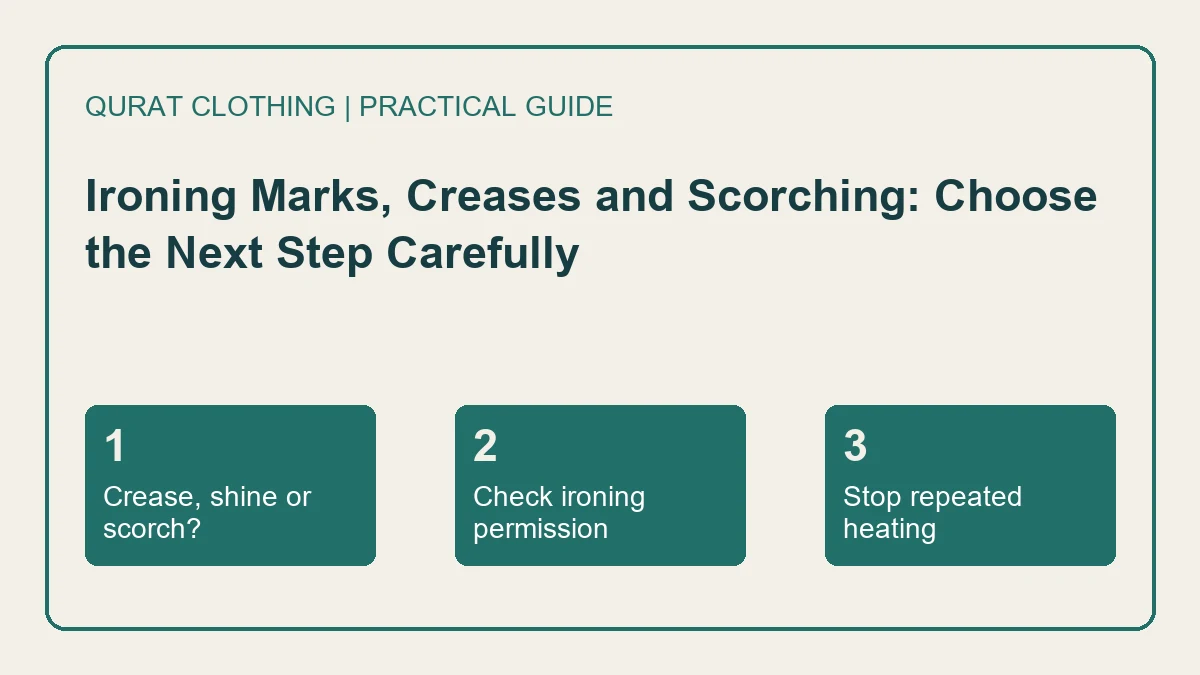
A crease, a shiny pressed area and a scorched patch are different observations after ironing. Stop applying heat until you have checked the garment label and identified what changed. More pressure or a hotter setting is not a reliable way to reverse an existing mark.
Describe the appearance in consistent light
Lay the garment relaxed and compare the affected section with the surrounding fabric. Does it look like a fold line, a change in surface reflection or a discoloured area? Is there distortion around a print, seam or fastening? Photograph the overall garment and the detail.
Do not rub or scrape a shiny patch to prove what it is. A surface can look different at different viewing angles. A photograph may document the concern without establishing whether fibres, a finish or an applied decoration changed.
Read the ironing instruction for the whole item
Check the care label rather than choosing a temperature from the main fibre name alone. Decorations, blends and finishes may impose restrictions. A crossed-out iron means do not iron under the relevant care-symbol system. If the instruction is missing or unclear, seek clarification before continuing.
GINETEX's care-symbol reference explains the role of label instructions. Do not assume every symbol system or every iron uses identical wording. Follow the garment label and appliance instructions together.
Separate an ordinary crease from damage
If the label permits ironing, a normal crease may be addressed through that permitted routine. But do not treat a discoloured or altered surface as simply a stubborn crease. Pressing repeatedly can increase an existing change.
For example, a trouser fold left from storage and a shiny line produced during pressing can look similar at first glance. Record when you noticed it and what happened before it appeared. Without a baseline, keep the cause uncertain rather than inventing a precise explanation.
Take particular care around decoration
A print, applied patch or embroidery is a separate detail to consider. Do not place an iron directly on an uncertain surface to test its resistance. Our decoration buying guide explains how to inspect methods and care requirements, while the printed-clothing article covers documenting changes to graphics.
If the fabric or decoration has visibly changed, stop. A household recipe cannot be promised to restore scorched fibres or a damaged print. An appropriate cleaner or textile repair specialist can assess the individual garment and explain realistic limits.
Keep recent-purchase questions factual
For a mark present on arrival, retain photographs and contact Qurat Clothing before ironing or washing. For a mark noticed after pressing, record the label, the setting used and the actual timeline. The return policy sets eligibility and exclusions; do not assume any ironing concern is automatically covered.
Make the next routine easier
Review drying and storage so avoidable deep creases do not build up. Keep ironing instructions with the garment information you use for laundry. When choosing current men's tops, women's tops, boys' clothing or girls' clothing, check care requirements before buying. Easy care is a claim that needs support from the actual item, not an assumption based on appearance.
A crease and a shiny area appear together
After pressing a garment, the wearer sees a remaining fold line and a different-looking shiny patch. The two observations should be recorded separately before any further heat is applied.
| Record | What to compare or ask |
|---|---|
| Crease | Photograph the line and surrounding cloth. |
| Surface appearance | Record shine, discolouration or texture change separately. |
| Instructions | Check the actual ironing guidance and treatment history. |
What this example helps you decide
More heat is not automatically the right response to an uncertain mark. Keep the garment’s label and any previous treatment in the enquiry, and seek appropriate advice if the surface has changed.
For an item enquiry, include the QC code, selected size and the specific detail you need clarified. Keep an observation separate from an assumption, and retain any relevant photographs with your order record.
Comments
Be the first to comment.