
Musty Clothes After Storage or Travel: A Practical Care Plan
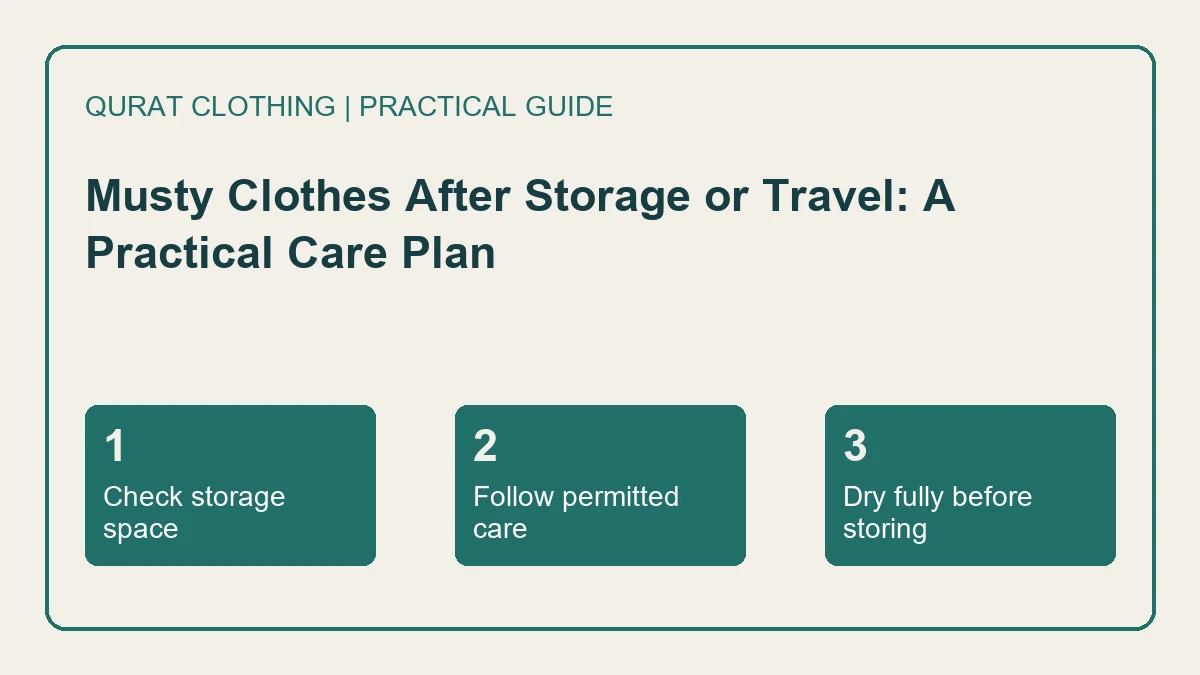
For clothes that smell musty after storage or travel, start by checking whether they were put away fully dry and whether the storage space is still damp or stale. Plan cleaning from the garment's care label. Fragrance can disguise an odour without addressing the condition that allowed it to develop.
Separate the garment from the storage problem
Take the clothes out and inspect the bag, drawer or cupboard. Look for trapped dampness, a wet towel packed nearby or a recently cleaned item stored before it dried. Record what you find rather than assuming a particular organism caused the smell.
Do not put freshly cleaned clothes straight back into a damp container. Address the storage condition and let the space dry appropriately. This article is clothing care guidance, not a diagnosis of a building problem or advice for handling extensive mould contamination.
Read the label before choosing a wash
Different garments permit different cleaning methods. Check whether domestic washing is allowed and whether there are restrictions on temperature, cycle or drying. An odour does not cancel a dry-clean-only instruction. Our care-label guide helps organise those questions.
Whirlpool's guidance on mildew smells in clothes emphasises appropriate cleaning, thorough drying and dry storage. Apply the garment label and your appliance instructions; do not turn a general article's treatment recipe into permission to use it on every fabric.
Clean and dry without a chemical guessing game
Use a compatible laundry product as directed. Avoid combining cleaners or adding a household chemical because it appears in a social-media tip. More detergent is not automatically a better response and can leave another cleaning problem.
For washable garments, leave enough space for the permitted washing process. Remove items promptly afterwards and dry them by a label-compatible method. Check thicker sections such as waistbands, cuffs, pockets and linings before deciding that the whole item is ready for storage.
If the garment requires professional care, explain the odour and storage history to the cleaner. Ask what result is realistic. No cleaning method can be promised to restore every item, especially where there is visible damage or an unresolved storage problem.
Repack around the next laundry opportunity
On a trip, keep clean, dry clothing separate from used damp pieces. If a wet item must be transported briefly, unpack it for appropriate drying or cleaning as soon as the routine allows. A sealed bag is a transport arrangement, not long-term storage for damp clothes.
For example, if laundry will only be available the day after arrival, plan a clean change for that interval and identify where the damp items can be dealt with. Do not fill the whole suitcase with extra clothes while leaving the drying plan unresolved. See the family trip laundry plan.
Decide what to keep or replace
After appropriate care, reassess the garment when fully dry. If the smell persists or there is damage, seek a suitable professional assessment rather than repeatedly increasing treatment strength. Review the storage cause before buying replacements.
If a genuine wardrobe gap remains, compare current boys', girls', men's or women's clothing. Read the actual care requirements before ordering from Qurat Clothing. An easy-to-maintain routine is more useful than a promise that one fibre or style will never develop an odour.
A travel bag is unpacked late
A family opens a return-trip bag after it has remained packed. One item was not fully dry when packed, and several garments have developed an unexpected smell.
| Record | What to compare or ask |
|---|---|
| Item condition | Separate fully dry, used and still-damp clothing. |
| Bag and storage | Record where and how long the items remained packed. |
| Care instructions | Check the requirements for each garment. |
What this example helps you decide
Unpack and plan garment-appropriate care rather than returning the closed bag to storage. A smell alone does not identify every cause or establish that one treatment is suitable for all the clothes.
For an item enquiry, include the QC code, selected size and the specific detail you need clarified. Keep an observation separate from an assumption, and retain any relevant photographs with your order record.
Comments
Be the first to comment.