
Pilling, Lint or Fuzz? Identify What Is on Your Clothing
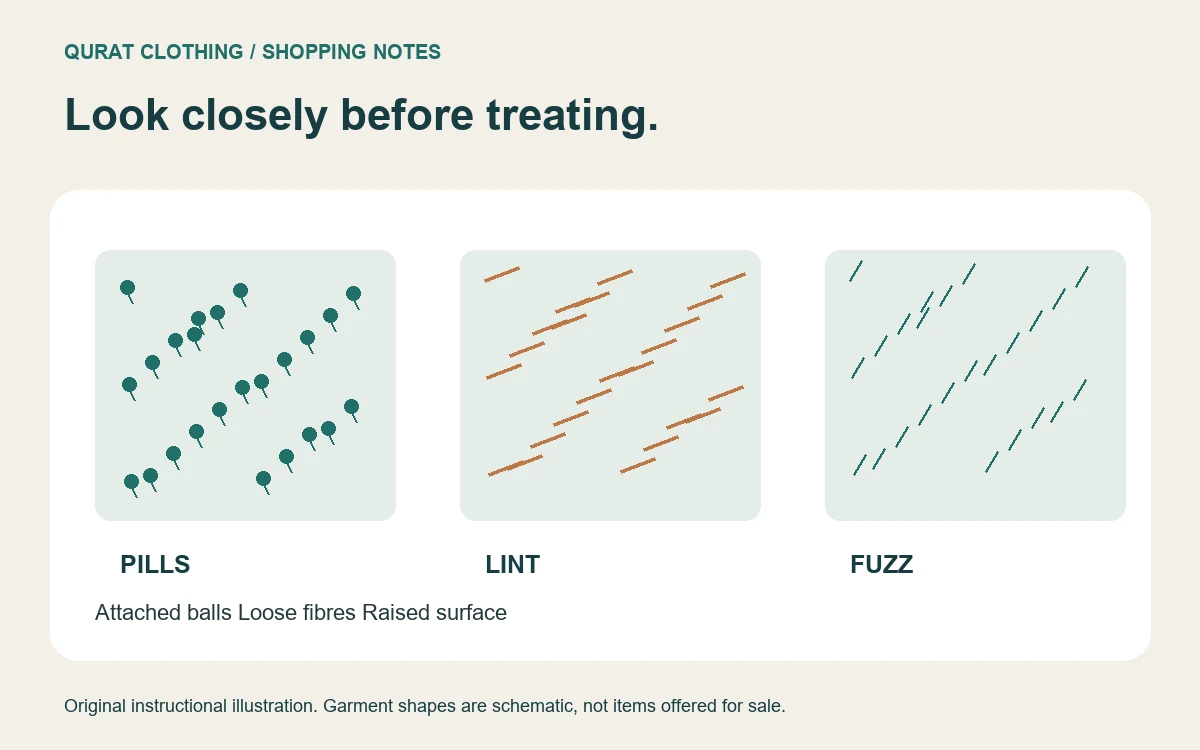
Small attached balls of tangled fibres are usually called pills. Loose fibres sitting on a garment are lint, while fuzz describes a more general raised or hairy-looking surface. These descriptions can help you decide what to inspect next, but a photograph alone may not identify the cause of a change in fabric.
Before treating a favourite sweatshirt, pause and look closely. Pulling at an attached fibre ball or brushing an unfamiliar fabric aggressively can make the problem worse. Start with the garment's label, its condition and what has changed since you last wore it.
Start with a simple observation
Put the dry garment on a clean, well-lit surface. Look at one affected area and one less affected area. Are there individual balls anchored to the fabric? Are loose fibres lying across the surface? Is the whole fabric brushed or fluffy in a way that may be part of its original finish?
Do not stretch the garment hard to inspect it. If you have a photograph from when it arrived, compare the same location. This can be more useful than trying to remember whether a fleece interior was always fuzzy. Record what you see before trying a treatment, particularly if you may need to ask the retailer about an unexpected condition.
What pilling means
CottonWorks' garment-durability guidance describes pills as entangled fibre balls attached to a fabric surface. It explains that fibre choice, yarn and fabric construction, finishing and use can all affect pilling. Pills can develop during wear or laundering; their appearance does not prove that the wearer washed the garment incorrectly.
That distinction matters when discussing a purchase. “There are attached balls around the side seam after two wears” is a more precise description than “the fabric is bad.” A precise observation gives the retailer something concrete to assess without pretending that you have performed a textile laboratory test.
How loose lint differs
Lint may be transferred from another item or released during use and laundering. A dark garment can make pale loose fibres particularly noticeable. Check whether the material is resting on top rather than anchored into a ball. Do not assume that every visible fibre came from the garment underneath it.
Consider the load history as a question, not a verdict. Was the item washed with a towel or a very fluffy garment? Was something left in a pocket? Was the surface already present before washing? These questions help organise the facts. They do not establish a cause without inspection.
When fuzz is part of the fabric
Some garments have a deliberately brushed or raised surface. A fleece interior can look different from its smoother outer face. Compare like with like: the inside of one sleeve should not be judged against the outside of the chest panel.
A new area of uneven surface change still deserves attention, especially if it comes with thinning, a snag or a hole. In that case, stop experimenting and seek advice appropriate to the garment. An intended fluffy finish and damaged fabric are different possibilities, and neither should be assumed just from the word “fleece.”
Choose a cautious next step
Read the care label and any product-specific guidance first. If you are considering a brush, lint tool or fabric shaver, check whether the tool is suitable for that material and follow its instructions. Test discreetly only where the garment and tool guidance allow. Avoid cutting or pulling attached fibres by hand as an improvised repair.
For a new purchase with an unexpected issue, contact the seller before washing, shaving, trimming or altering it. An attempted treatment can change the evidence and may affect return eligibility. Qurat Clothing's current return policy explains the condition requirements and how to report an incorrect or defective item.
Keep a useful record
Write down the product reference, the affected area, when you first noticed it and any care already carried out. Take one overall photograph and one close view in consistent light. Keep the label photograph if it is readable. You do not need a dramatic description; accurate observations are more useful.
For example: “QC reference noted on the order; small attached balls on the outer side panel; noticed before the first wash; no trimming attempted.” Another case might be: “Loose white fibres over a navy surface after a mixed load; no attached balls visible.” Those are different reports and may call for different advice.
Use the finding when shopping again
Think about where the garment meets repeated rubbing, such as a bag strap or the edge of a desk. Read fabric and condition details, but do not treat a fibre percentage or brand name as a guarantee against pilling. Construction and finishing also matter.
When browsing Qurat Clothing's hoodies and sweatshirts or other casualwear, inspect the product photographs and choose around the intended use. Ask about an unclear surface detail before ordering. You can use the existing general garment-care guide for the broader washing routine.
A worked comparison
Imagine two navy tops from the same laundry basket. The first has pale fibres lying across its chest; the second has little balls attached around a side seam. Do not put both into one treatment category just because they look untidy from a distance. Keep a separate note for each. Check whether the loose material can be assessed without abrasion, and ask for suitable guidance about the attached balls. The shared wash history is useful context, but the surfaces still need to be evaluated individually.
A clear description comes before a remedy
Separate what you can see from what you suspect caused it. Identify attached pills, loose lint or an original raised finish as carefully as possible, then choose a label-compatible next step. That approach protects the garment and makes a conversation with the retailer more useful.
A deliberately brushed surface is not automatically a fault
Some garments have a raised or brushed surface as part of their finish. Distinguish that overall texture from loose lint, local pills or a pulled loop. A fluffy appearance in a photograph cannot by itself establish shedding or damage.
Compare the actual listing and inside view where available. Note whether the surface is consistent across the garment or has changed only at friction points. Avoid shaving or cutting an uncertain area before identifying what it is.
Our knit snag guide explains why a connected loop needs different handling from a surface pill. The fabric-label guide separates finishing from fibre content. When comparing boys' sweatshirts or girls' sweatshirts, ask about the actual inside finish instead of treating brushed as a universal quality grade.
Surface fibres look different on two garments
One knit has small attached clusters, while another garment carries loose-looking fibres from elsewhere. Those observations may need different handling, even if both are described casually as fuzz.
| Record | What to compare or ask |
|---|---|
| Attachment | Record whether material appears attached or resting on the surface. |
| Location | Show the wider garment and affected area. |
| Label and history | Check care requirements and previous tool use. |
What this example helps you decide
Identify the actual surface concern before choosing a removal tool. A treatment used on a sturdy fabric should not automatically be repeated on a delicate knit or decoration.
For an item enquiry, include the QC code, selected size and the specific detail you need clarified. Keep an observation separate from an assumption, and retain any relevant photographs with your order record.
Comments
Be the first to comment.