
A Zip Has Caught the Fabric: What to Check Before Pulling Harder
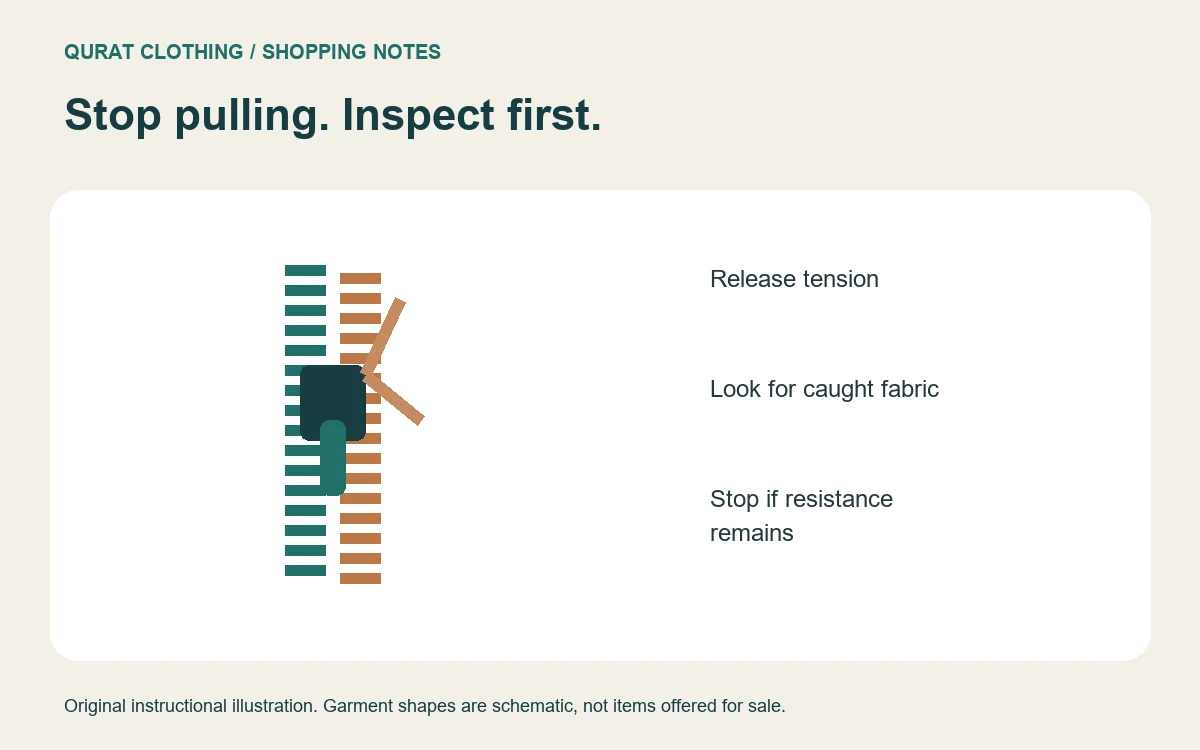
When a clothing zip catches fabric, stop pulling harder. Look for material trapped beside the slider and avoid forcing the mechanism. If the garment is being worn and the skin or fabric is under tension, take the pressure off before deciding whether you can inspect it safely.
A caught lining, a damaged slider and a zip that has not been engaged correctly are different problems. A general article cannot diagnose them from the word “stuck.” The aim of the first check is to prevent more damage and decide whether the item needs the retailer's or a repair professional's attention.
Stop before the pull becomes a lever
It is tempting to grip the pull tab more firmly when a zip will not move. That can increase the load on the pull, slider and surrounding fabric. Do not attach pliers or another tool to gain leverage on an unfamiliar clothing fastening.
Put the garment in a position where you can see the area without pulling the fabric tight. Keep fingers and skin clear of the slider. If you cannot inspect the fastening comfortably, or it is caught on something worn close to the body, get appropriate help rather than continuing to tug.
Identify what you can actually see
Look at both sides of the slider. Is a fold of lining or outer fabric entering it? Are threads wrapped around the area? Are teeth visibly misaligned, missing or damaged? Is the bottom connection fully seated on a separating zip?
Record the visible condition without trying to make the mechanism move repeatedly. One clear photograph may be more useful for support than a series of forceful attempts. Avoid inserting a sharp object beside the slider to probe the obstruction; this can damage the fabric or cause injury.
What the fastening manufacturer advises
YKK's fastening-care guidance addresses a slider that catches fabric. It advises gently moving back toward the original point and avoiding excessive force because the pull tab can break. This guidance describes a specific situation; it is not a promise that every stuck zip can be freed at home.
If the fabric does not release with a gentle, clearly understood movement, stop. Visible damage, persistent resistance or uncertainty about what is trapped are reasons to seek help. Do not turn a cautious check into repeated attempts with increasing force.
Do not add a lubricant by guesswork
Online suggestions may recommend wax, soap, oil or other products. A substance that changes the fabric's appearance or interacts with a decoration can create another problem. Without suitable instructions for the fastening and garment, adding a product is an experiment rather than a dependable repair.
The same applies to heat. Do not iron a stuck slider or press the surrounding area to force it flat. Heat and pressure limits differ across components, and the garment label may not permit the treatment. Read confirmed product guidance or ask a professional before applying anything.
Treat a new item as an issue to document
If the zip does not function as expected when the parcel arrives, keep the item unused and contact the seller before alteration or repair. Record the product reference, selected size and the stage at which the problem occurs. Include a close photograph of the fastening and an overall view showing its position on the garment.
Qurat Clothing's exchange and return policy explains how to report an incorrect or defective item and the applicable condition requirements. A home repair attempt can change the condition being assessed, so do not assume it must be attempted before contacting support.
Decide whether repair advice is appropriate
For a well-used favourite, a clothing repair professional can assess the slider, teeth, tape and surrounding fabric. Ask what is damaged, what the proposed work changes and whether the repair is likely to meet your needs. Replacing a slider and replacing an entire zip are different jobs.
Also consider the rest of the garment. A fastening repair may be worthwhile on a piece that otherwise fits and serves you well. If surrounding fabric is badly worn, the professional may identify additional limits. Make the decision from the actual condition and repair proposal rather than the original purchase price alone.
Build a calmer fastening routine
When the zip is working normally, keep the surrounding fabric clear and use the intended alignment. If a lining repeatedly drifts toward the slider, note it and seek advice instead of treating every catch as an isolated incident. Follow garment-specific care instructions during washing and storage.
When buying another jacket or zipped top, inspect closure photographs and ask about unclear construction details. Browse Qurat Clothing's boys' jackets, girls' jackets or relevant casualwear collections, then check the selected product. A category label does not establish the fastening manufacturer or performance.
A useful support example
A clear report might say that a jacket opens normally until the slider reaches a particular section of the lining, where a visible fold enters the mechanism. Include the photograph and state that no lubricant, heat or tool has been used. A different report might describe teeth that separate after the slider passes. Those observations should not be treated as the same problem. Keeping the description precise lets the seller or repair professional decide what needs inspection, without asking you to repeat an action that may cause further damage.
Know when to stop
The useful first response is restraint: release tension, inspect what is visible and avoid excessive force. A clear support request or professional assessment is a better next step than damaging the fabric while trying to rescue a stuck zip.
The lining catches halfway through closing
A zip has already started moving, then stops with lining visible beside the teeth. This is different from a closure that never engaged at its starting point.
| Record | What to compare or ask |
|---|---|
| Position | Record where movement stopped. |
| Obstruction | Show any visible trapped material without pulling harder. |
| Condition | Keep existing damage separate from the current obstruction. |
What this example helps you decide
Pause before forcing the slider or applying a product. Use the actual closure guidance and obtain help where the construction or condition is unclear. Keep new-delivery evidence intact.
For an item enquiry, include the QC code, selected size and the specific detail you need clarified. Keep an observation separate from an assumption, and retain any relevant photographs with your order record.
Comments
Be the first to comment.