
Dry-Clean-Only Clothing: What to Check Before Buying or Cleaning
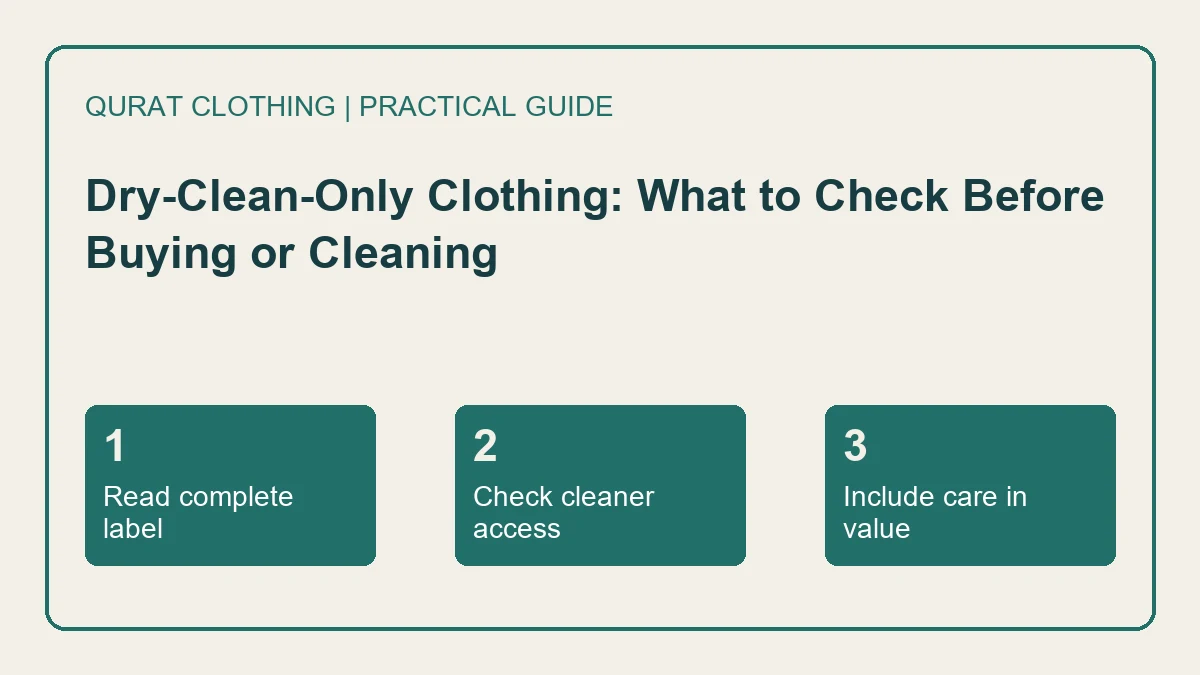
Dry-clean-only clothing needs a care decision before purchase, not only after a stain appears. Read the complete label, consider access to an appropriate cleaner and ask about unclear instructions. Professional wet cleaning, professional dry cleaning and domestic washing are different processes.
Read the wording and symbol together
A professional-care symbol can contain information intended for the cleaner about permitted processes and restrictions. It is not a home washing programme. A do-not-wash instruction rules out domestic washing within the relevant care-label system; do not reinterpret it as permission for a quick soak.
GINETEX's care-symbol reference explains these distinctions. Labels and symbol systems vary, so an unfamiliar mark should be clarified rather than guessed. Keep a clear photograph to show the cleaner.
Consider the complete garment
The outer fibre is only part of the item. Linings, structure, decoration and mixed materials can affect its care requirements. Do not decide that a cotton-labelled outer section makes the entire garment washable.
Our lined-clothing guide helps identify which sections need attention. If there are separate labels or contradictory product details, ask Qurat Clothing about the actual item before ordering or cleaning.
Include care in the buying decision
Think about how often you will wear the garment, when it may need cleaning and whether the process fits your routine. Obtain a current quote from a suitable cleaner if cost matters; there is no universal cleaning price to insert into every clothing budget.
For example, a low purchase price may still be inconvenient if the item is needed repeatedly during a trip with no access to appropriate care. Compare it with a suitable alternative whose label matches the facilities you will have. This is a practical comparison, not a claim that professionally cleaned clothing is poor value.
Explain the condition to the cleaner
Point out stains, odours, loose attachments or prior treatments before handing over the garment. State what contacted it if known. Keep uncertainty visible when the cause is unknown. A professional can assess the item and describe likely limits, but no process can be promised to remove every mark or restore damaged fabric.
Do not apply an unverified home solvent first and then present the item as untreated. Products already applied can matter to the next decision. Our stain-care guide explains why treatments should follow the actual mark and label.
Keep purchase concerns separate from cleaning
If an unexpected mark or fault is present on arrival, photograph it and contact Qurat Clothing before commissioning cleaning or repair. The return policy sets eligibility and exclusions. Professional cleaning does not automatically preserve return eligibility or prove that a fault existed at delivery.
When browsing current women's clothing, men's clothing, girls' clothing or boys' clothing, check the live item's measurements, condition and care information together. Choose a garment whose complete upkeep you can manage rather than buying around an assumed home-washing exception.
The care routine changes the buying decision
A shopper likes a garment but normally uses a household wash routine. Its actual label requires dry cleaning, so the shopper needs to decide whether the intended use and available care service justify buying it.
| Record | What to compare or ask |
|---|---|
| Instruction | Read the actual garment label. |
| Routine | Consider how often it will need appropriate care. |
| Practical cost | Request a real service quotation if cost affects the decision. |
What this example helps you decide
Keep an unknown care cost unknown until it is confirmed. Do not buy on the assumption that a general household method can replace the garment’s actual instructions.
For an item enquiry, include the QC code, selected size and the specific detail you need clarified. Keep an observation separate from an assumption, and retain any relevant photographs with your order record.
Comments
Be the first to comment.