
Reversible Clothing: Check Both Sides, Fastenings and Fit
Check whether clothing is designed to reverse, how closures work and whether both faces suit you. Compare full construction, fit and care.
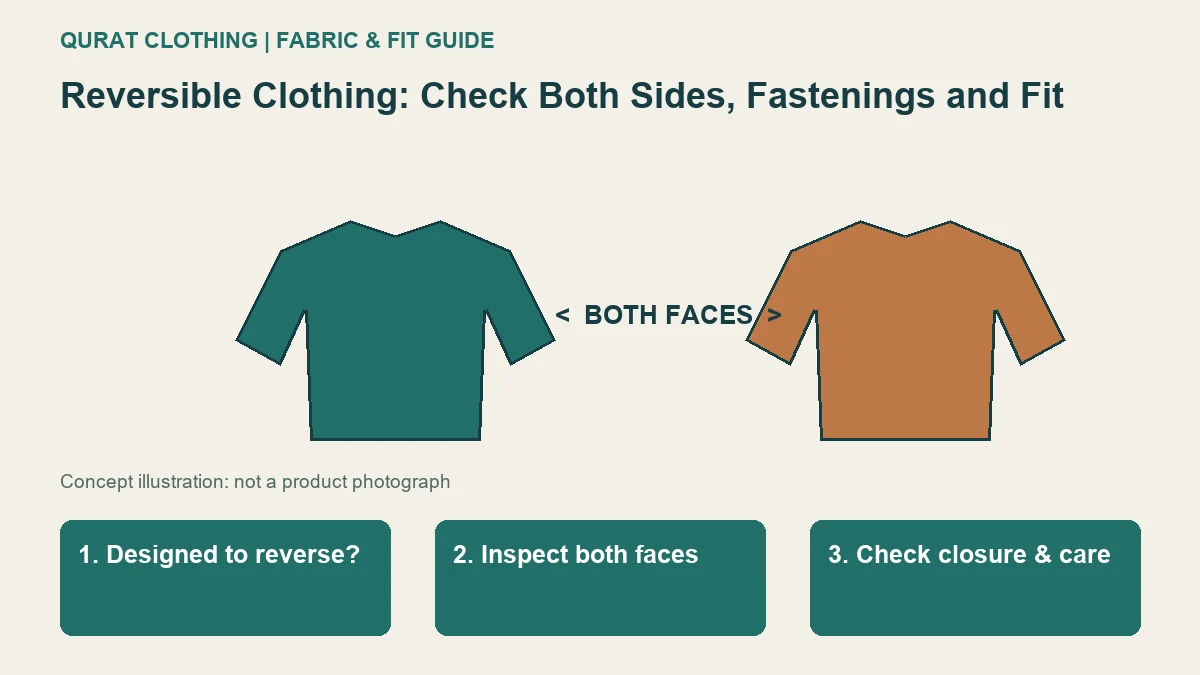
Reversible clothing should be designed to be worn with either face outward. A garment with a contrasting lining is not automatically reversible. Check the description, finishing, closures and usable features on both sides before counting it as two looks in one purchase.
Confirm the design intention
Look for photographs of both wearing arrangements and a clear statement that the item reverses. An inside view may simply document the lining. Ask which side is intended for outward wear if that remains unclear.
Seamwork's reversible-garment construction guide explains why seam treatment, layers and details matter to a two-sided design. For a shopper, the practical question is whether the complete supplied garment supports both arrangements, not whether you can physically turn it inside out.
Inspect openings and useful features twice
Check how a zip, button or other fastening operates in each configuration. Do not assume that a visible reverse side has a suitable closure. Inspect pockets too: a pocket that works on one face may not have an equivalent on the other.
Look at neck, cuff and hem finishing, plus any care or brand labels. Do not cut off a label to make an ordinary lined item seem reversible. Retain care information and ask about the design before altering a new purchase.
Compare the complete fit
Two layers can affect how the garment sits over other clothes. Use a comparable reference and check chest, sleeve or waist dimensions by the seller's method. A relaxed-looking outer face does not prove that the whole construction has the room you need.
For example, a reversible jacket may close over a tee yet bunch over a sweatshirt. Compare the intended combination instead of treating a second colour as compensation for a fit issue. Our jacket layering guide and lining guide cover those checks.
Count the second look only if you will use it
Assess both colours or patterns against clothes you own. If one face never suits your routine, compare the purchase mainly by the side you will wear. Do not invent a saving by pricing two hypothetical separate garments you would never otherwise buy.
Read care for the complete item; its two faces should not be assigned separate incompatible home treatments. This educational guide does not confirm reversible stock at Qurat Clothing. Browse current boys' jackets, girls' jackets, men's tops or women's tops, and verify reversibility explicitly if it is essential to your choice.
A second colour is visible inside a jacket
A jacket’s contrasting inside surface suggests a reversible style, but the shopper cannot see whether both sides have usable pockets and finished fastenings.
| Record | What to compare or ask |
|---|---|
| Maker description | Confirm that two-sided wear is actually intended. |
| Both sides | Request whole-garment views of each arrangement. |
| Function | Check closures, labels, pockets and care instructions. |
What this example helps you decide
Do not infer reversibility simply from an attractive lining. A genuine two-sided design still needs independent fit and feature checks on the side the wearer plans to use.
For an item enquiry, include the QC code, selected size and the specific detail you need clarified. Keep an observation separate from an assumption, and retain any relevant photographs with your order record.