
Sleeveless Tops and Layers: Armhole, Coverage and Fit Checks
The armhole is one of the most useful details to check when buying a sleeveless top or vest online.
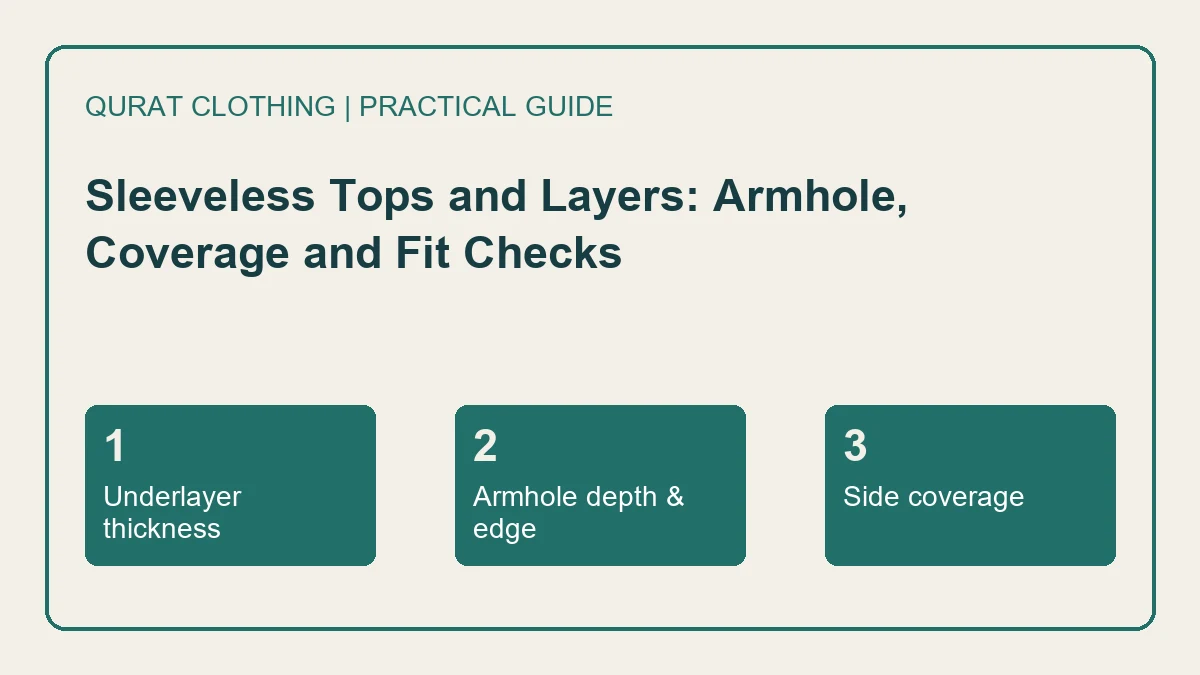
The armhole is one of the most useful details to check when buying a sleeveless top or vest online. It affects coverage, access and the room available for another layer. A garment described as sleeveless may be intended as a base top, an outer vest or part of a set, so establish its purpose before comparing sizes.
Start with the intended layer
Decide whether the item will touch the skin or go over a tee, shirt or sweatshirt. An outer vest needs enough room at both the chest and armhole for that combination. A base top may need a different neckline and side coverage. Do not assume the same flat chest width works for both uses.
If you already have a comfortable example, put it flat with its usual underlayer beside it. Compare the garment's shape at the shoulder and underarm. Keep the comparison to a similar construction; an open-front vest and a close-fitting sleeveless tee do not provide the same reference.
Inspect three armhole details
First, check where the lower armhole sits relative to the chest. A low opening may show more of an underlayer than you want. Second, inspect the edge: a binding, turned edge or rib trim can feel different against the skin. Third, check whether the shoulder section is wide enough for the coverage you prefer.
A photograph can show shape but cannot confirm how the edge feels. If seam texture matters, ask for a close view of the inside finish. This is especially useful when shopping for a child with an established clothing preference. Avoid promising that a particular style will solve sensory discomfort.
Compare the opening, not just overall width
Two tops with the same chest width can have different armhole depths. Ask for a measurement using clearly defined points if that detail is important. State whether you mean the straight opening depth or the curved edge length; those are different measurements.
For example, if your reference vest fits over a light tee but pulls over a sweatshirt, make the thicker layer the comparison case. Increasing the body width without checking the shoulder and armhole can leave the original problem unresolved.
Confirm the listing before checkout
Look for agreement between the title, description and photographs. If one says sleeveless and another suggests full sleeves, ask Qurat Clothing to clarify the actual item. Do not choose a size around an unresolved design contradiction.
Compare current girls' tops, boys' tops and relevant adult women's or men's tops. Availability varies. A good shortlist records intended layer, preferred coverage, armhole question and actual dimensions together.
A sleeveless top is needed over a chosen underlayer
The buyer wants a particular level of side coverage. The front image shows little about the arm opening when the wearer moves.
| Record | What to compare or ask |
|---|---|
| Opening | Ask how armhole depth is measured. |
| Side view | Request the garment’s actual side construction. |
| Outfit | Compare against a comfortable reference with the intended underlayer. |
What this example helps you decide
Armhole coverage depends on the specific cut, size, body and layering choice. A sleeveless label or chest width alone cannot settle the question.
For an item enquiry, include the QC code, selected size and the specific detail you need clarified. Keep an observation separate from an assumption, and retain any relevant photographs with your order record.